 UK:
 India:
 Bangladesh:
 Pakistan:
Securing your student visa is a major milestone - but what you do next determines how smoothly your journey abroad begins. Every year, thousands of Indian students fly out for higher education, yet many run into the same avoidable pre-departure mistakes: misplaced documents, unplanned finances, and last-minute packing chaos.
To help you avoid those, here's a verified, practical pre-departure checklist for the 2026 intakes, built from real student experiences across our UK, USA, Canada, Australia, Europe, and other partner destinations.
1. Essential Documents: Your "Safe Folder"
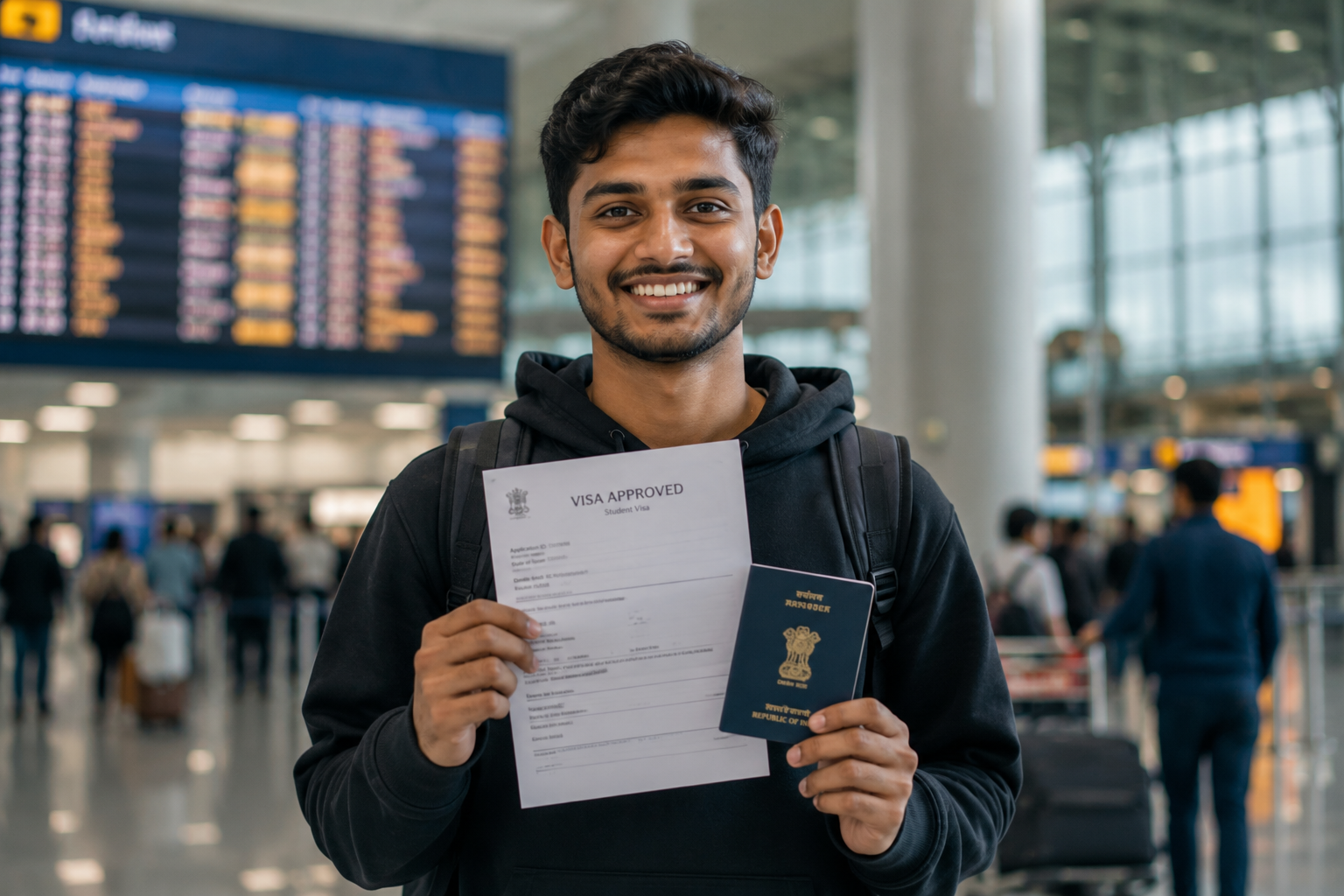
Never underestimate paperwork - your documents are your identity abroad. Keep all originals and photocopies organised in a waterproof folder in your carry-on bag.
| Document | Priority | Notes |
|---|---|---|
| Passport with valid student visa | Critical | Check visa dates, spellings, and stamp accuracy. |
| Offer Letter / CAS / I-20 / COE | Critical | Your university's formal confirmation letter - naming varies by country (CAS in the UK, I-20 in the USA, COE in Australia). |
| Financial proof / bank statements | High | Must meet the maintenance/funds requirement for your destination country. |
| Tuition fee receipts | High | Proof of deposit or full payment. |
| Accommodation confirmation | High | University hall letter or tenancy agreement. |
| Medical certificate / health check | Mandatory | Required by several countries for international students - check your destination's specific requirement. |
| IELTS / PTE / TOEFL score report | Mandatory | Original certificate preferred at university check-in. |
2. Finances and Currency Setup
Money management abroad begins before you board your flight.
- Forex card: Apply for a student forex card (ICICI, HDFC, Axis) for daily spending in your destination currency.
- Cash carry: Bring a small amount of local currency in cash for immediate use - transport, food, and incidentals on arrival.
- Bank notification: Inform your Indian bank about international transactions in advance, so your card isn't blocked for suspicious activity.
- Local bank account: Most countries have student-friendly banks that will let you open an account once you have your offer letter/CAS and a local address proof.
3. Travel, Baggage and Technology
- Book early: Airfares rise sharply during peak intake months (typically January and September).
- Check weight limits: Most airlines allow around 30kg check-in and 7kg cabin baggage - confirm with your specific airline.
- Smart tagging: Label every bag with your name, phone number, and destination address.
- Carry-on essentials: Passport, offer letter/CAS, forex card, power bank, adapter, and any prescribed medicines.
- Technology kit: A universal power adapter for your destination country, an unlocked smartphone, and your university's mobile app or portal downloaded in advance.
4. Accommodation and Local Setup
Your housing decision affects your comfort, safety, and budget from day one.
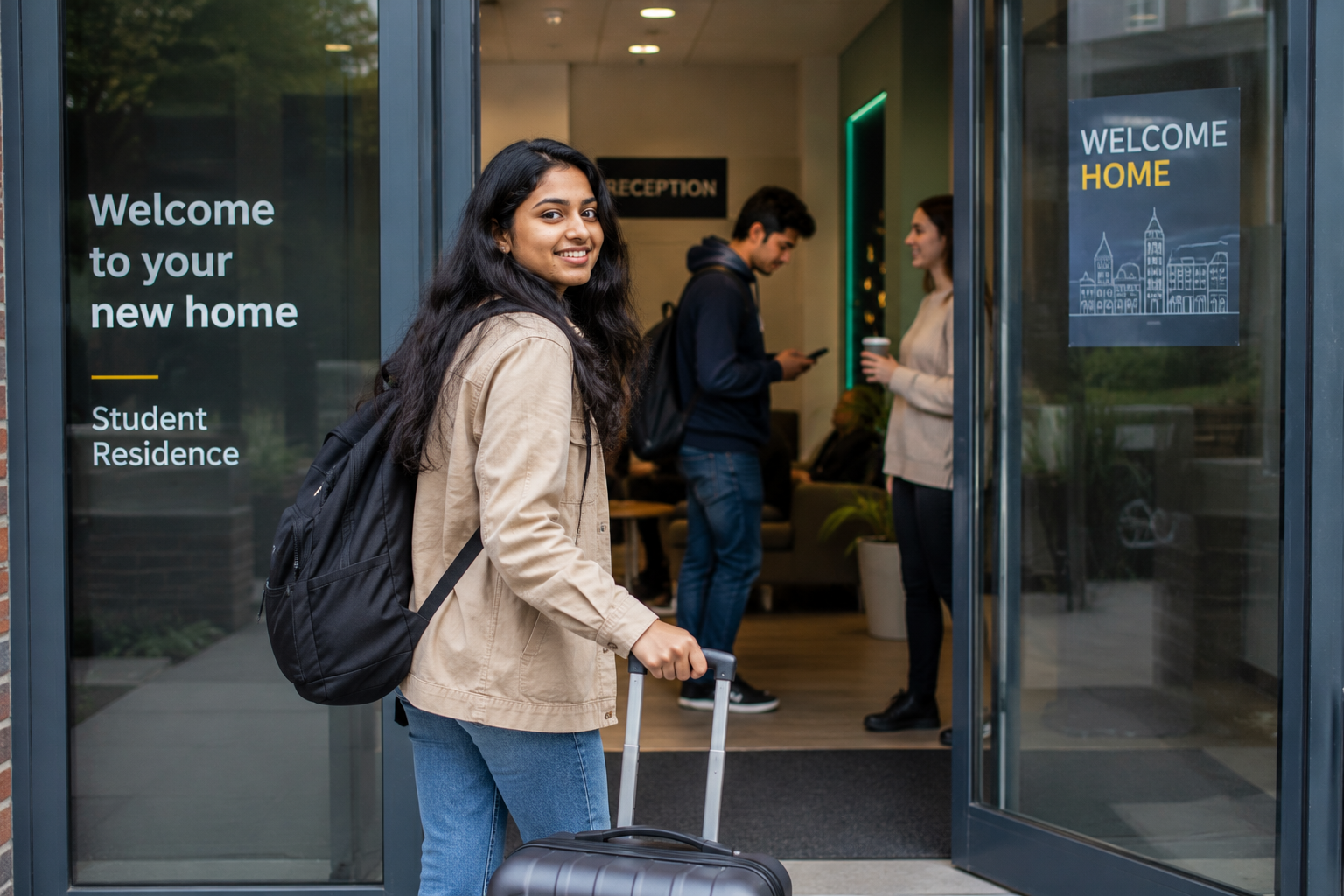
- On-campus halls: Secure and close to classes - ideal for first-year students who want a simpler settling-in period.
- Private student housing: Common in major cities - always verify the contract and deposit terms before signing.
- Shared apartments: A more affordable long-term option - confirm deposits, utilities, and lease length clearly.
5. Health, Insurance and Medicines
- Health cover registration: Most study destinations require or strongly recommend student health insurance - confirm what your visa/university requires and keep the receipt.
- Medical preparation: Carry any prescribed medicines with a doctor's note, ideally enough for your first two to three months.
- First-aid pack: Include basics for fever, allergies, colds, and digestion.
6. Weather and Clothing
Climate varies hugely by destination - plan smart, not heavy.
For colder destinations (UK, Canada, Europe, parts of the USA and Australia), pack one proper winter coat, a couple of warm layers, waterproof shoes, and formal wear for presentations. Buy bulk everyday clothing locally once you land - it's often cheaper than overpacking, and you'll know what the local weather actually calls for.
7. Cultural and Social Preparation
Adjusting to life abroad matters as much as academics.
- Learn basic local etiquette - greetings, queuing norms, and punctuality expectations vary by country.
- Join your university's Indian Society or a local student community group early.
- Expect some culture shock in the first few weeks - it's normal, and it fades as you adapt.
8. Final 7-Day Countdown Checklist
| Day | Task |
|---|---|
| 7 Days Before | Confirm flight, accommodation, and any mandatory health cover payment. |
| 5 Days Before | Organise documents into your safe folder and weigh your luggage. |
| 3 Days Before | Check your forex balance and notify your Indian bank of travel dates. |
| 1 Day Before | Rest, print your boarding pass, and pack essentials into your hand luggage. |
Your Partner in a Smooth Take-Off
At Step4Progress, we do more than secure admissions - we guide you until you've settled safely at your destination. Our pre-departure assistance includes flight and accommodation guidance, local SIM and forex setup tips, a personalised packing checklist, and help connecting with your student community before you travel.